

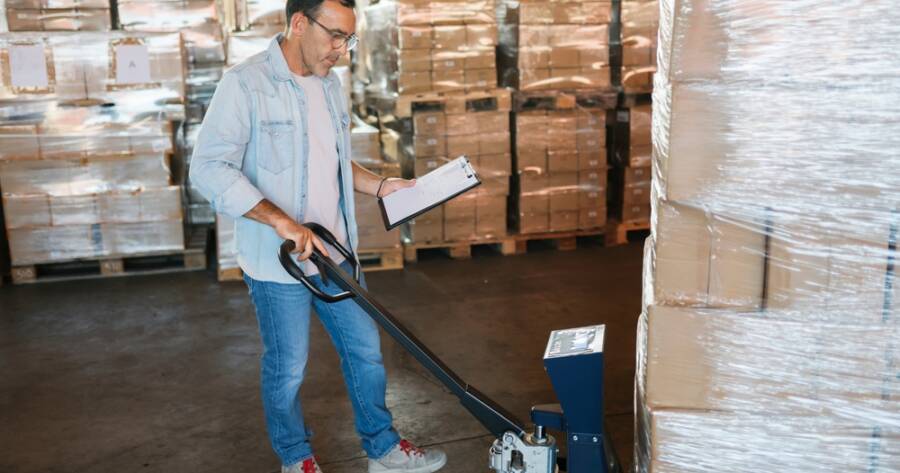
Wholesale liquidation pallets offer resellers a powerful way to access brand-name merchandise at deeply discounted prices — turning surplus retail inventory into real profit opportunities across dozens of product categories.
What Wholesale Liquidation Pallets Actually Are
When major U.S. retailers like Amazon, Target, CVS, and Sam’s Club end up with excess inventory — whether from customer returns, overstock, or seasonal clearance — they don’t simply throw it away. Instead, that merchandise gets bundled into large lots and sold off to liquidators at a fraction of its original price. These collections of goods, known as wholesale liquidation pallets, can contain anywhere from a few hundred to several thousand individual items grouped together and offered at steeply reduced prices (source).
The appeal for resellers is straightforward: merchandise that once sat on the shelves of recognizable national retailers becomes available at prices that create substantial room for profit. A reseller who understands how to evaluate, purchase, and move this inventory effectively can build a genuinely scalable business around it.
The Financial Case for Buying Liquidation Pallets
The economics behind the liquidation business model are what draw so many entrepreneurs to it. Retailers facing mountains of returned or surplus goods are motivated to move large volumes quickly, which means buyers can acquire inventory at prices far below what consumers would normally pay. In some cases, truckloads of retailer returns and overstock are available for as little as 5 to 10% of the products’ original manufacturer’s suggested retail price — meaning a household appliance with a $50 retail tag might be acquired by a liquidator for roughly $3 (source).
That kind of margin structure allows liquidation businesses to turn meaningful profit even when reselling well below the original retail price. A typical gross profit margin in this industry sits around 75%, driven by the wide gap between acquisition cost and resale value (source). To put that into concrete terms: a reseller buying a truckload at roughly 7% of retail value and reselling individual pallets at around 28% of retail on a load with $115,000 in total retail value could generate approximately $32,000 in revenue against only $8,000 in inventory cost (source).
Top Product Categories and Where the Margins Are
Not all liquidation pallets are created equal. While general merchandise and household goods represent a large portion of the market, certain categories consistently deliver the strongest returns for resellers. Cosmetics and beauty products regularly stand out as among the most profitable, with brands like Revlon and e.l.f. commonly achieving markup rates between 300% and 500% when resold through platforms such as eBay, Amazon, and Poshmark (source).
A single cosmetics pallet priced at $550 can hold merchandise with a combined retail value anywhere between $3,000 and $7,000, while a general merchandise truckload priced around $5,500 can carry retail value exceeding $50,000 (source). Resellers who take the time to understand which categories deliver the best margins for their target platforms and customer base give themselves a significant competitive advantage.
Getting Started Without a Large Initial Investment
One of the more accessible aspects of the liquidation pallet business is its relatively low barrier to entry compared to traditional retail. Startup costs can be as modest as $10,000, covering essential expenses such as storage space, insurance, business registration, basic equipment like a pallet jack, and the first inventory purchase (source). This makes the model attractive for small business owners, side hustlers, and entrepreneurs who want to enter the resale market without committing to a large upfront investment.
Logistics are also more manageable than many first-time buyers expect. Wholesale pallets ship via LTL (Less Than Truckload) freight to locations across the United States, with most single-pallet shipments costing between $150 and $400 depending on destination distance (source). Buyers don’t need a warehouse dock or specialized receiving equipment to get started — many resellers begin operating out of garages or small rented storage units before scaling up.
Timing Purchases to Maximize Opportunity
Experienced resellers understand that timing plays a meaningful role in the profitability of liquidation buying. The business is notably seasonal, with the period following the winter holidays representing one of the most active times for acquiring quality inventory. After Christmas, major retailers find themselves overwhelmed with returned merchandise and actively seek buyers who can take that surplus off their hands at scale — often at even steeper discounts than usual (source).
Buyers who position themselves ahead of these seasonal surges — establishing supplier relationships and securing storage capacity before peak return periods — tend to capture the best deals. Understanding the retail calendar and planning purchases accordingly is one of the more impactful strategies a reseller can develop over time.
Evaluating a Pallet Purchase Before Buying
Due diligence matters significantly in the liquidation space. Because pallets often contain a mix of conditions — from shelf pulls and overstock items to customer returns — buyers benefit from reviewing available manifests when possible. A manifest is a detailed list of items included in a pallet lot, and having access to one allows a reseller to estimate potential resale revenue before committing to a purchase.
Beyond the manifest, resellers should factor in platform fees, shipping costs, and the time investment required to sort, list, and sell individual items. The gross margin potential is high, but a realistic assessment of all associated costs helps ensure that each pallet acquisition actually delivers on its profit potential rather than just looking attractive on paper.
Why You Should Learn More About Wholesale Liquidation Pallets Today
The wholesale liquidation pallet market gives resellers access to brand-name inventory from some of the country’s largest retailers at prices that create genuine profit potential. With relatively low startup costs, strong margins in categories like cosmetics and general merchandise, and flexible logistics that serve buyers across the United States, the model has proven itself as a viable business opportunity for entrepreneurs at many different stages. Seasonal buying cycles and disciplined evaluation of pallet manifests and total costs add additional layers of strategy that experienced resellers use to sharpen their results. For anyone interested in building a profitable resale operation around quality retail surplus inventory, the liquidation pallet space offers a well-established and financially sound path forward.